
Fang Shi Fu · Brick-Carving Worker at the Decorative Brick Factory
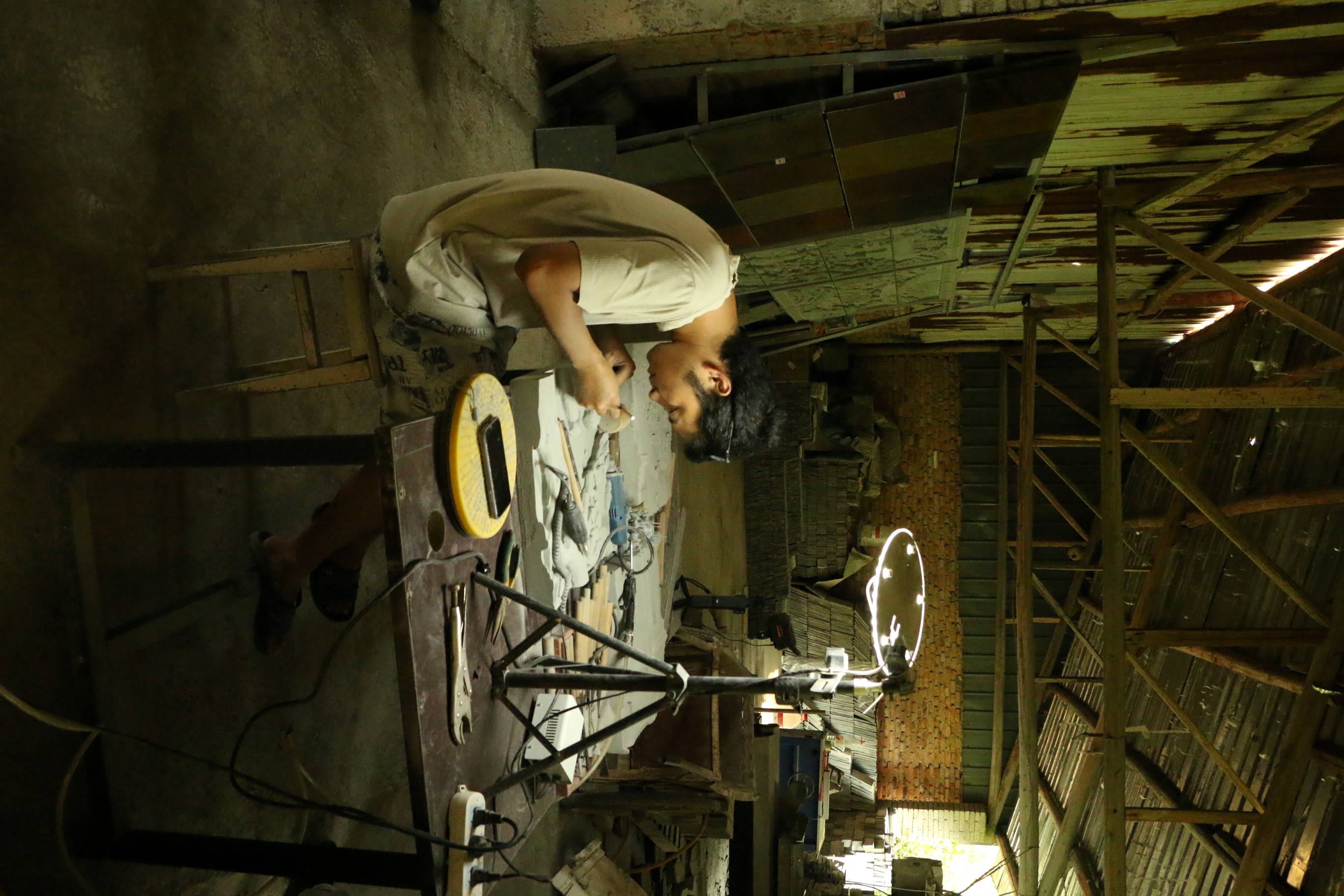
Fang Shi Fu · Brick-Carving Worker at the Decorative Brick Factory
Authorization · Authorized“Anyone who does it can do it. But doing it well—that's actually not easy. The expressions on the figures, right. And flowers and things like that—flowers have their forms too, their expressions too. ”
Full transcript
《The Decorative Brick Factory: Interview with Master Fang, Brick-Carving Artisan》
Editorial note: Q = interviewer; Fang = Master Fang; Aside = bystander interjection. In editing, I've tried to keep the original wording and cut repetition and meaningless filler. Obvious transcription errors have been restored from context, e.g. “pig eyelash” = pig bristle, “Jixi/Jixian” = Jixi, “Jinshan” = Jing County, etc.
Aside: About how much does this brick cost per square meter?
A: Big and small differ. Our 400 is this big; 180 per square meter.
Aside: If it's made like this, does that include shipping or not?
A: If you make it like this, this big, this thick. These are actually the kind used in the Forbidden City. Once oiled, it doesn't absorb water—the inside doesn't absorb water. The unoiled one doesn't absorb water. This one doesn't absorb water; see, this one doesn't absorb water—the water rolls off. But this one just doesn't look like this. Each brick has a different pattern. After it's laid, we'll add more texture to it. That way, even if the floor is damp, it's fine; it won't... Even if the floor is damp or the air is damp, this kind—how to put it—matches furniture well, colors well.
Q: Master, can I ask you a few questions while you work?
Fang: Mm, go ahead.
Q: Your surname?
Fang: My surname is Fang.
Q: This is called a scholar's studio; this set is called the Four Treasures of the Study. Your date of birth?
Fang: April '89, I think.
Q: Are you local or from elsewhere?
Fang: I'm from Jixi.
Q: From Jixi. Quite a few people in Jixi do brick carving, huh?
Fang: Not that many in Jixi now. Just that group, the group with us.
Q: Are there many as young as you?
Fang: Young ones, not many older ones.
Q: How long have you been doing this?
Fang: About ten-some years.
Q: Did a relative introduce you, or who? Who brought you in? How did you find a master?
Fang: We also formally apprenticed, in Jixi. Someone introduced us, more or less.
Q: When you apprenticed, was the master famous? Did you get to choose?
Fang: That was still just the beginning. When we started, no one was doing it yet. There wasn't any talk of famous, of how big a name.
Q: Around what year?
Fang: Around '07 or '08, '08, '07. It was just starting then. Back then no one was doing the whole machine thing either.
Q: How many people in your family? Do they do this too?
Fang: Just me. But I do very little now.
Q: How many siblings do you have?
Fang: I have one brother.
Q: And only you do this? Did you choose it yourself or did your family?
Fang: I chose it myself at home.
Q: You don't have a draft you made yourself—you just do it directly like this?
Fang: I drew it with a pencil, just sketched it lightly with a pencil.
Q: You sketch with a pencil first. The pencil sketch is flat—so how do you handle the depth?
Fang: That depends on your own feel. Once you've done a lot, you know. Once you've done a lot, you don't need to sketch with pencil. Actually you don't really need to sketch; you can do it without pencil at all.
Q: What year did you come to this factory?
Fang: I haven't been here long, I think. I came this year.
Q: Before that you were in Jixi?
Fang: Mm, I ran around. Wherever they needed a master, I'd go.
Q: So for what you do, how do others judge what's good and what's not?
Fang: You look at whether it resembles it, at the expression. You make it three-dimensional—the expression. Everyone who does it can do it, but doing it well is actually not easy. The expression of figures—right. And flowers and such—flowers have form too, have expression too. But doing it—this stuff is all like that. Everyone who does it can do it; doing it well is not easy.
Q: How do you think your work is in this trade?
Fang: We're not out to grab money.
Q: About how long does it take to learn?
Fang: To learn it, at least three years, at least two or three years. But to be able to do these things, at least five or six years, seven or eight years. In two or three years you can carve, but not yet—if you're on your own, some things you still can't do. To work independently takes five or six years. It depends on the person. Some people can do it in two or three years—very impressive. Some people can do it for ten-some years and still be useless. It depends on nature, on talent.
Q: Do you think you learned this relatively fast?
Fang: I think I'm okay.
Q: What do you think you do relatively well? Where do you feel you're better?
Fang: All okay, I guess. I feel about the same.
Q: Is there anything you're especially good at?
Fang: Maybe flowers and birds and such.
Q: What I want to ask is, is there a trick, something you figured out yourself in learning this trade, or something?
Fang: No, there's no shortcut trick. You just accumulate day by day. When you've done it to a certain level, you naturally know how.
Q: Does this trade hurt your hands? Does it hurt your hands, or your eyes, or what part?
Fang: It's all okay. But sitting for a long time, you'll definitely have some occupational issues. It's like sitting here, same as you sitting in an office for a long time—your neck gets a bit uncomfortable. Eyes are okay.
Q: Does this require good eyes? Can someone nearsighted do this?
Fang: Nearsightedness doesn't affect it. If you're nearsighted, you just look closer. Presbyopia will affect it. If an older person is presbyopic, it affects them. Nearsightedness is okay. Aren't I nearsighted? It's fine. Wear glasses.
Q: What about dust?
Fang: Not much dust, it's okay. Brick carving dust isn't a big problem either. It's not machine carving—machine carving probably makes a lot of dust.
Q: Do you use machine carving now?
Fang: We use machines too. This kind, we use them too. Sometimes we use some. These big ones are all hand-carved—the big blocks, big surfaces, use machines? Some places can use it. For example, places like this, where it's not fully done, first run the machine over it, then touch it up by hand. That's more efficient. If it were purely hand-made, it would really take too long.
Q: Is there anyone who does it purely by machine?
Fang: There are people who do it purely by machine. Aren't these all not purely machine-made? Some have been touched up, some haven't.
Q: When you were with your master, during those years as an apprentice, did you pay him, or did he pay you?
Fang: At our time, we still paid a portion, a little money. Usually you finish apprenticeship in three years. But after about a year or two or three, that custom was gone. When we were there, it was still around. Later, people stopped paying the master, paying for food and such. We still had that then. Later it was gone.
Q: When you first finished your apprenticeship, about how much could you make a month? Has it changed compared to now?
Fang: Hard to say. When we first finished, we took contract jobs. There wasn't any fixed monthly amount.
Q: Now you should earn more than before? Is it better skill or more work?
Fang: Both. There's commission. Skill and efficiency improve.
Q: Doing this, about how much can you make a month?
Fang: A little over 10,000, a little over 10,000.
Q: Are there many people doing it now?
Fang: Not many, but it doesn't sell that much either. The market is relatively small.
Q: So you're on piecework?
Fang: Piecework, piecework.
Q: How much for carving one piece like this? Or does it depend on what you carve?
Fang: Not necessarily. Before the brick is started, it depends on what you make. They see the thing and then talk price. Sometimes the price is discussed after it's done.
Q: For a finished piece like this, if it's carved, how long does it take?
Fang: This one about two or three days, three or four days, around three or four days. It was already run over by machine once, the machine went over it once. Some places the machine went over once, and now I touch it up again. The details are far from good, because he made the model himself.
Q: You came from Jixi. Do you rent a place here, or does the boss rent for you?
Fang: He gave me one. He has housing. He has housing over there.
Q: Do you live alone or with several people?
Fang: Just me alone.
Q: How often do you go home?
Fang: Whenever I want to go home, I go. It's hard to say. Whenever I feel like going back, I go back for a bit.
Q: Do you work both morning and afternoon here, or usually half a day?
Fang: Usually both morning and afternoon. Generally, if I want to rest, I might rest, go out and have some fun.
Q: It's completely up to you?
Fang: Right.
Q: Being here alone, do you play music or listen to something while working?
Fang: Sometimes I listen to novels or something, or play some music. I play music too. Listen to songs, listen to novels, and listen while I work. Otherwise it's boring. There's no one here.
Q: Listening to music doesn't affect your work?
Fang: That won't affect it. Watching, watching is no good. Watching videos won't do. Listening is fine, audio is fine.
Q: What you make—if you didn't consider the cost per piece, would you use this in your own home renovation or something?
Fang: How to put it? It depends on what kind of house. If it's commercial housing, few people would use this. If it's your own private house, sure, use it if you want.
Q: Do you think you'd like it?
Fang: I can't say for sure. Maybe, maybe I'd do it.
Q: Would you choose a more Western style, or something like this?
Fang: Usually Chinese style. It depends on personal taste. Actually the market isn't big now. It's relatively small, and not many people do it.
Q: You carve first and then fire, right?
Fang: This is already fired. This is fired first, then carved.
Q: This is already fired? But why isn't it black?
Fang: This isn't clay, it's brick. This is finished. This is fired. If it were clay, you'd touch it and it would fall apart. Each has its advantages. Some are carved first and then fired, but that's clay, a bit wetter—it might warp or something later.
Q: It seems like one person does the whole process—you do it all yourself? They give you a brick, the machine runs over it once, and then you do the rest entirely?
Fang: Right.
Q: Is there purely hand-made?
Fang: There's purely hand-made too. We do it too. But it takes much longer.
Q: This is also intangible cultural heritage in Jixi, right?
Fang: Mm, yes.
Q: If someone asked you, do you think this is an intangible cultural heritage craft, or just打工? How do you feel?
Fang: I feel it's both. It's打工, and it's also intangible cultural heritage. Sometimes I do it myself too. I do it myself, make it and sell it myself, not just working for others.
Q: Do you have your own shop?
Fang: Sometimes if someone orders, I might make some.
Q: So you're your own boss too?
Fang: Not really a boss. It's just private handicraft.
Q: I see some people set up a workshop, do this, and put their name on it. Do you do that?
Fang: I feel if you put your own name on it, the price goes up. But that depends on what you're making. We generally don't do that. In our trade, no one does. These are usually hung up high—you see—people generally don't sign them or anything.
Q: These figures on top—are the drafts copied from elsewhere, or can you create them yourself?
Fang: This one he did himself. This one he created himself. Some are others', some from friends. But if it's your own creation, it counts as an artwork. You could put your name on it, but in the trade it seems not many people recognize that.
Q: Are you married?
Fang: No.
Q: In Jixi now, is it that both men and women marry later? Or is it a choice?
Fang: It depends on the person. Not necessarily.
Q: How old are you?
Fang: Over 30.
Q: You don't want to marry either?
Fang: It depends on the person, on the individual. Some people might feel marriage is your choice.
Q: Or are you too busy, no time to marry?
Fang: Saying you have no time to marry—that's nonsense.
Q: So it's a choice?
Fang: Right. It depends on whether you want to marry. Marriage can be a lot of pressure.
Q: If you don't even consider marriage, will you consider children later?
Fang: It's precisely because I don't want to consider children that I don't consider marriage. I don't want to think about children either. Raising a kid seems really hard these days.
Q: If you had a child, would you want him to do this?
Fang: I probably wouldn't. Even if I had a child, I wouldn't consider him doing this. Because I feel it's like that in many trades—carpenters don't want their kids to be carpenters either. So whichever trade you say is good, whichever is what—unless it's a really lucrative, decent profession, like lawyer, doctor, that kind of thing.
Q: Do you like doing this? Have you ever made a piece you really liked, that you felt was especially good?
Fang: Sometimes I feel a bit of accomplishment. But after doing it so many years, it's been too long. I haven't made any particularly fine pieces. Sometimes there's no time. If there were, I'd just do it for myself, for fun.
Original Chinese transcript
《花砖厂 砖雕师傅访谈录》
整理说明:问=采访者;方=方师傅;旁=旁人插话。整理时尽量保留原话,删除重复和无效口语;对录音中明显识别错误处,按上下文恢复,如“猪睫”=猪鬃,“吉西/几线”=绩溪,“金山”=泾县等。
旁:这个砖一平方大概要多少钱?
答:大的和小的有差别。我们400是这么大的,一个平方180。
旁:如果做成这种的话,包括运费还是不包括运费?
答:如果做这样的,就这这么大的,这么厚的。这果然是故宫里面用的。这个打了油以后,它就不吸水,里面不吸水。这个不带油的就不吸水。这个不吸水,你看这个不吸水的,这个水推上去。但这个就是看起来没有这个。这他每块砖的花纹不一样。这个铺好以后我们会再给它增加质感。这样地上潮也没关系,它也不会。就地上潮空气潮,但是是这个是,它这种呢,怎么讲呢,家具啊好配好配色。
问:师傅你一边干活,我一边来问几个问题行不?
方:嗯你说。
问:贵姓?
方:我姓方。
问:这个叫文房,这套叫文房四宝。出生年月?
方:89年4月吧。
问:你是本地人还是外地人?
方:我绩溪。
问:绩溪的哈。绩溪不少人做砖雕啊?
方:绩溪现在也不算多吧,就那班人,跟我们一起的一班人。
问:像你们这么年轻的多了是吧?
方:年轻的,年纪大的不多。
问:你干这个多长时间了?
方:差不多有十几年了。
问:然后是亲戚介绍的还是谁?怎么谁带你?怎么找师傅?
方:我们也是拜师,在绩溪拜。算是别人介绍的。
问:你们拜师,那个师傅是不是有名啊?你们会选择吗?
方:那个时候还是刚刚开始的时候,我们做的时候,那时候还没人做呢,也没说什么有名,有多大的名气。
问:大概哪一年?
方:大概是07年08年左右吧,08年、07年。就那时候刚刚开始,那时候整个机器都没人做。
问:你自己家里人几口人?是不是也做这个的?
方:不就我自己。但做的很少现在。
问:你兄弟姐妹几个?
方:我有一个兄弟。
问:然后只有你来做这个?是你自己选择的还是家里人?
方:家里自己选择的。
问:你这没有自己打的底稿,就直接这样?
方:用铅笔画的,铅笔稍微描了一下。
问:用铅笔先描,那铅笔描的是那个平面的,然后你打的多深什么的,这个怎么办?
方:这个就看你那个自己感觉。做多了都知道了,做多了就不用划铅笔了。其实不太用划铅笔的,铅笔不画都可以。
问:那你是哪一年到这个厂的?
方:我过来好像也没多久,今年来的。
问:之前都在绩溪?
方:嗯到处跑,就哪地方需要师傅就过去。
问:那你们这个做的就是,别人评价怎么叫好,怎么叫不好呢?
方:就看像不像,看神态吧。做立体感嘛神态嘛。做的人都会做,但是做的好呢,其实都不容易。人物的神态,对。然后那花这些东西呢,花也有型啊,也有神态啊。但是做的话,其实这东西都这样的,做的人都会做,要做的好都不容易。
问:你觉得你做的在这行当中怎么怎么样?
方:我们没有钱抢了。
问:大概学多长时间学会的?
方:这也得学会起码也得三年吧,至少要两三年吧。但是你得你要会做这些东西呢,起码要五六年七八年以上。就是两三年会雕,但是还没有,如果独立的话,有些东西还不能做。独立的做需要五六年。看人嘛,有的人可能两三年就会了,很厉害了。有的人是十几年都没什么用有可能。看天性看天赋。
问:你觉得你学这个在这方面算是比较快的?
方:我觉得还可以。
问:你自己觉得在做这一块,做得比较好的,就是你感觉自己做得比较好的地方?
方:都可以吧,我感觉差不多吧。
问:有没有特别擅长的一种?
方:可能花鸟之类的。
问:我想问的是,就是一个比较窍门,就是你自己在这个学这行领悟出来的或者是什么?
方:没有一个,这个没有捷径的窍门。就是你日积月累的做,做的到了一定程度你自然就会了。
问:你做这行比较伤手?有没有比较伤手,还是伤眼睛这样的,还是哪一块?
方:都还都还好吧。就是坐长了他肯定会有一点职业病之类的。就等于坐在这嘛,跟你们坐办公室坐长了一样的,有颈椎会有点不舒服。眼睛还好。
问:这对眼睛要求高吗?近视可以做这个吗?
方:近视不影响啊。近视你看的,你要站近看嘛。反正那个老花会有影响。如果老人家老花了,他会有影响。近视还好,我不也近视吗?那没关系,戴眼镜。
问:粉尘呢?
方:没什么粉尘还行。砖雕的粉尘也问题不大。他不是那个机器雕,机器雕估计粉尘就多了。
问:你们现在有机器雕刻?
方:机器我们也用啊,看这个我们也用。这种有时候也会用到一些。你这个大的都是手雕的,就大块大面用机器吗?有些地方能用得上,比方说这种地方,没有到位的地方先用机器打一遍,然后再用手工修。这样子就比较效率一点。要是纯手工做,那确实时间太长了。
问:有没有纯机器做的人?
方:纯机器做的有啊。这些都不是纯机器做的吗?都是有些修过,有些没修的。
问:像你们跟师傅的时候,那几年是像学徒的时候,是给他钱,还是他们给你钱哪一种?
方:我们那个时候,再交一部分钱吧,交一点点钱。一般三年出师。但是过了大概一两三年之后,就没这个习俗了。到我们那时候还有。后来就没有给师傅交钱,这个交伙食费这种事情。我们那时候还有。后来就没了。
问:那你们刚刚出师的时候,一个月大概能拿多少钱?跟现在有变化吗?
方:这个东西难说。我们那时候刚出师我们就做包工,也没说多少多少钱一个月。
问:那现在赚的应该比原来要多?是技术更好了还是做的更多了?
方:都会都有提成,技术效率啊都会提升。
问:像你做这个,一个月大概能拿多少?
方:1万多点吧,一万多一点。
问:现在做的人多啊?
方:不算多,但是这个他卖的也不算多,就市场也比较小。
问:那你们是按计件了就是?
方:计件计件。
问:做多少就像这样雕一块大概给多少钱?还是根据你雕的东西?
方:也不一定。这没开砖的,看你做成什么样子,看到东西了再来说价格。有时候做好了再说价格也不一定。
问:像这一块成品如果雕完呢?要花多长时间?
方:这个大概两三天,三四天吧,三四天左右。他的原先机器弄过一遍,机器打过一遍。机器然后有些地方机器打过一遍,打过一遍现在再修一遍。细节他很不到位,因为他自己做的那个模型。
问:那你从绩溪过来,你在这边是租房子还是老板给你租房?
方:他给我,他有房子。他那边有房。
问:那你是一个人住还是跟几个人一块住?
方:就我一个人。
问:多长时间回家一次?
方:想回家就回家,说不定说不准。什么时候想回去就回去一下。
问:那你在这是上午下午都干,还是一般一天干半天?
方:一般是上午下午都干。一般情况下,如果想休息一下也可能会休息,出去出去玩一玩。
问:完全根据你自己自由了?
方:对。
问:那你一个人在这边,平常搞着这个会放歌啊,会搞点什么听着?
方:我有时候会听听点小说啊什么的,或者放点歌。放点歌我也放。听歌听小说,然后就一边做事一边可以听,不然无聊嘛。没没有人在这边。
问:听歌不影响做这个哈?
方:那不会影响。看着看着就不行了,看视频就不行了。听着没事,音频没关系。
问:就是你做的这个,假如不考虑多少钱一块的话,你自己家里装修或什么,你愿意用这个吗?
方:这个东西怎么说呢,看你做什么样的房。如果做那种商品房,一般很少人会会用这个吧。如果是自己做自己私人的房应该可以,你想用就用啊。
问:你自己觉得你会喜欢?
方:我说不好不一定,可能可能会弄吧。
问:那你会选择那种比较西式的,还是选择像这种?
方:一般都做中中式。这个根据个人喜好来的。现在其实市场也并不大,市场比较小,做的人也不多。
问:你们都是先雕出来然后再去烧对吧?
方:这是烧好的,这是烧好再做的。
问:这是烧好的吗?但是为什么不是黑的?
方:这不是泥这是砖,这是做好的。这是烧好的。要是泥巴的话,你碰一下就会不行了。各有各的优点吧,有也有做好再烧的也有,但是是泥巴,比较湿一点的,它会有可能会到时候可能会变形啊什么的。
问:你这个好像他就是一个人一道工,就是完全一个人搞了?就是一块砖给你,机器过一遍,然后后面就完全你搞?
方:对。
问:有没有纯手工的?
方:纯手工的也有啊也做啊,那就估计要花的时间多了。
问:这个在绩溪也是非遗吧?
方:嗯,是。
问:就是如果别人问你,你自己觉得这个是一种非遗技艺手艺,还是打工?你自己感觉?
方:我感觉都是。打工也是打工啊,也是非遗啊。我有时候自己也做嘛,自己有时候也做。就自己做,然后自己做自己卖,不是给人家做。
问:你自己开店吗?
方:有时候别人订的可能会做一部分。
问:那就自己还当老板?
方:算不上老板,也就跟那个私人手工业。
问:我看他们就是搞个什么工作坊,搞这个然后上面还有自己的名字,你那有没有搞?
方:我感觉一般上面搞个自己的名字,那个价格就上去了。那是那看做什么东西。我们这个一般不做不做那个,我们这一行都没有这个。这种一般是挂在挂得很高的你看,一般都不会去落个款啊什么的。
问:你们这个上面的这些人物,这些东西是底稿是从别的地方抄来的,还是也可以自己创作?
方:这一幅是自己他自己弄的,这幅是他自己创作的。有些也是别人的,有些什么朋友的什么的。但是如果如果是自己创作的,他也算一个艺术品了,觉得可以挂名也可以啊,但是行内好像并没有多少人去认可这个东西。
问:结婚了吗?
方:没有。
问:现在绩溪是不是也是,不管男女结婚都比较晚?还是会选择?
方:这看人的,不一定。
问:你多大年纪啊?
方:30多岁。
问:你也不想结婚?
方:这看人的,看个人的。有的人可能觉得结婚,是你的选择。
问:还是你太忙了,没时间去结婚?
方:那都是没时间结婚,那是胡扯。
问:就是选择?
方:对,就取决于想不想结婚。结婚可能压力大嘛。
问:像你们连结婚都不考虑,以后会考虑小孩吗?
方:就是因为不想不考虑小孩,所以才不考虑结婚的。我也不想考虑小孩。现在觉得养个孩子怪不容易的。
问:如果你有小孩,你希望他干你这个行吗?
方:我应该不考虑。就算有小孩,我也不考虑他会做这个。因为感觉很多行业都是这样,包括木工啊,他都不想小孩做木工的。所以哪一行讲好,哪一行讲怎么样,除非你是真正赚钱的,比较好的职业,比如律师啊,医生啊什么之类的。
问:你喜欢干这个吗?就是有没有做出一块,然后自己特别喜欢,就觉得这个做得特别好?
方:有时候会有点成就感。但是做了这么多年了,有点时间太长了,也没有说做那种特别精品的东西,有时候也没时间去弄。就是如果有,就是像自己搞,然后自己玩。
Machine translated, corrections welcome